Blog
Equine Metabolic Syndrome
Equine Metabolic Syndrome (EMS) is a common — and often misunderstood — condition that affects many horses and ponies. While it can sound intimidating, EMS is very manageable when it’s recognized early and approached thoughtfully. Understanding the basics can help you protect your horse’s long-term health and reduce the risk of one of its most serious complications: laminitis.
What Is Equine Metabolic Syndrome?
Equine Metabolic Syndrome is a disorder of how a horse’s body processes energy, particularly insulin, a hormone that helps regulate blood sugar. Horses with EMS don’t respond to insulin normally — a problem known as insulin dysregulation.
When insulin levels stay too high, the horse’s metabolism becomes unbalanced, increasing the risk of laminitis and other health issues. While EMS is commonly associated with overweight horses, it’s important to know that not every horse with EMS looks obese.
Why Does EMS Happen?
There isn’t one single cause, but EMS usually develops from a combination of factors:
- Insulin dysregulation, which is central to the condition
- Dietary influences, especially feeds or pasture high in sugars and starches
- Genetics and breed tendencies, particularly in “easy keeper” horses and ponies
- Excess body fat, which actively contributes to hormonal imbalance
Some horses are simply more metabolically efficient than others — a trait that once helped them survive, but can now work against them in modern management environments.
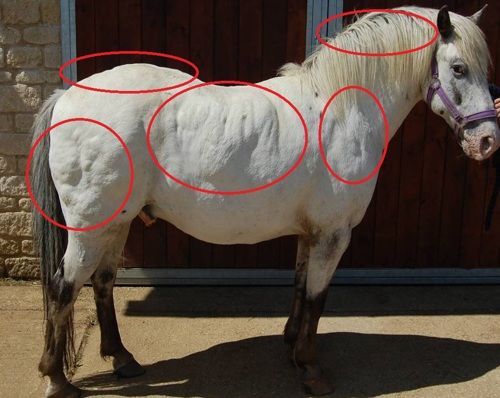
Common Signs to Watch For
EMS can be subtle, especially in the early stages. Signs may include:
- Difficulty maintaining a healthy weight
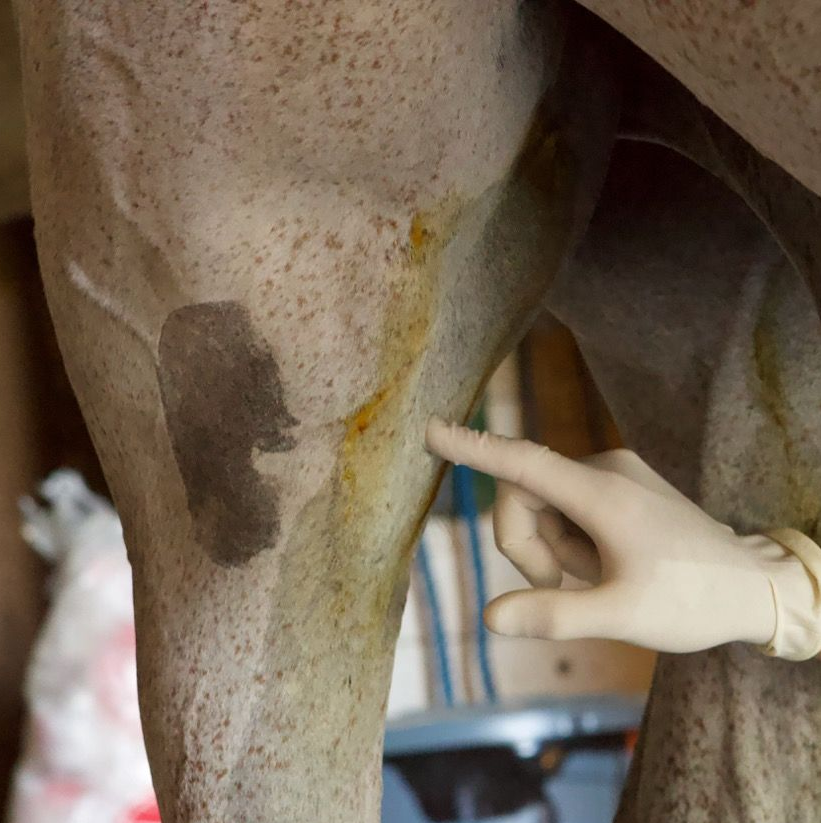
- Fat deposits in specific areas, such as:
- A cresty neck
- Along the shoulders
- Over the tailhead
- Around the sheath or udder
- A history of laminitis or unexplained hoof soreness
Because not all horses with EMS appear overweight, history and risk factors matter just as much as appearance.
How Is EMS Diagnosed?
Diagnosing EMS involves putting several pieces together:
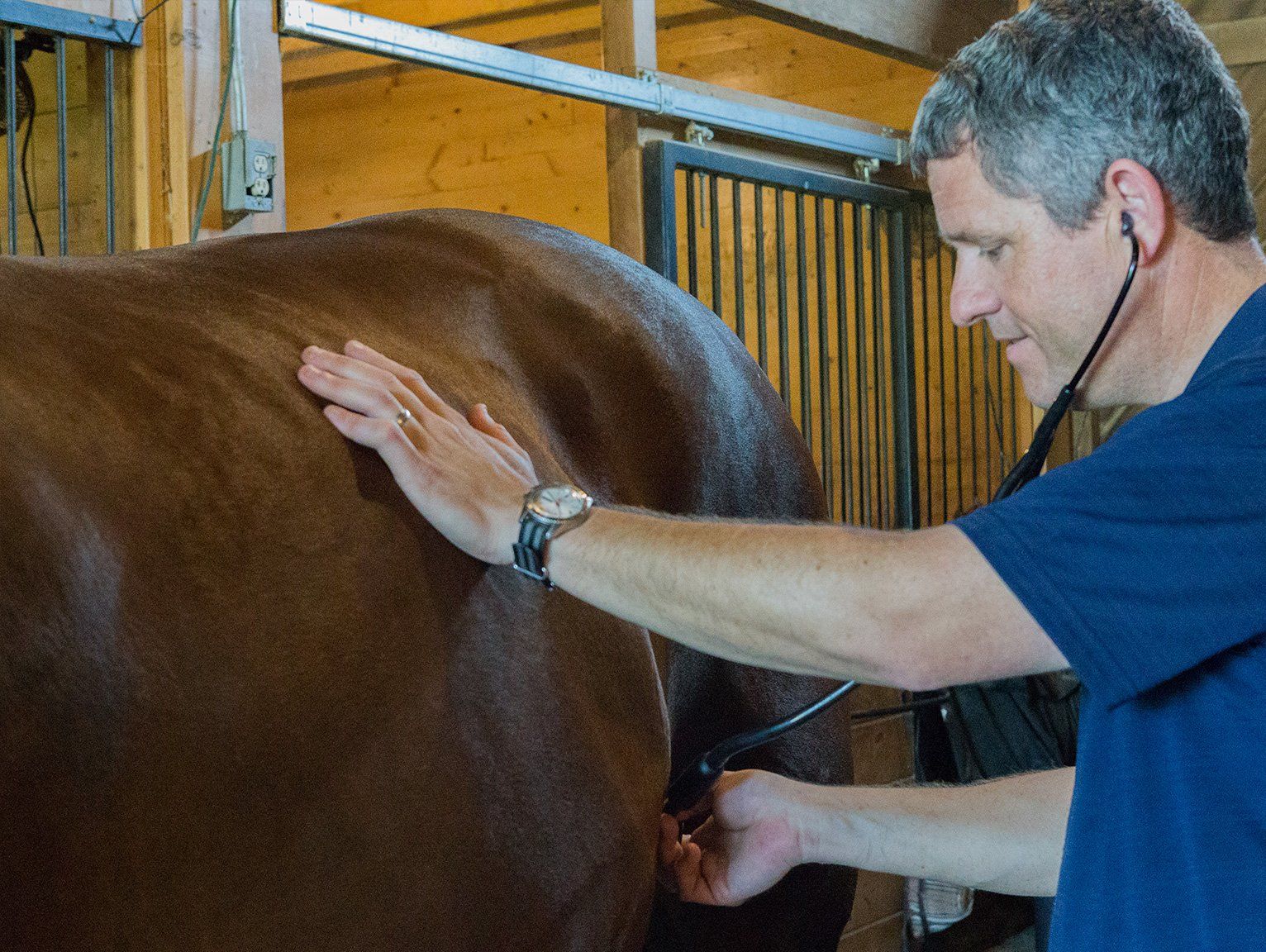
- A thorough physical exam, including body condition and fat distribution
- Hoof evaluation and, in some cases, radiographs to assess for laminar changes
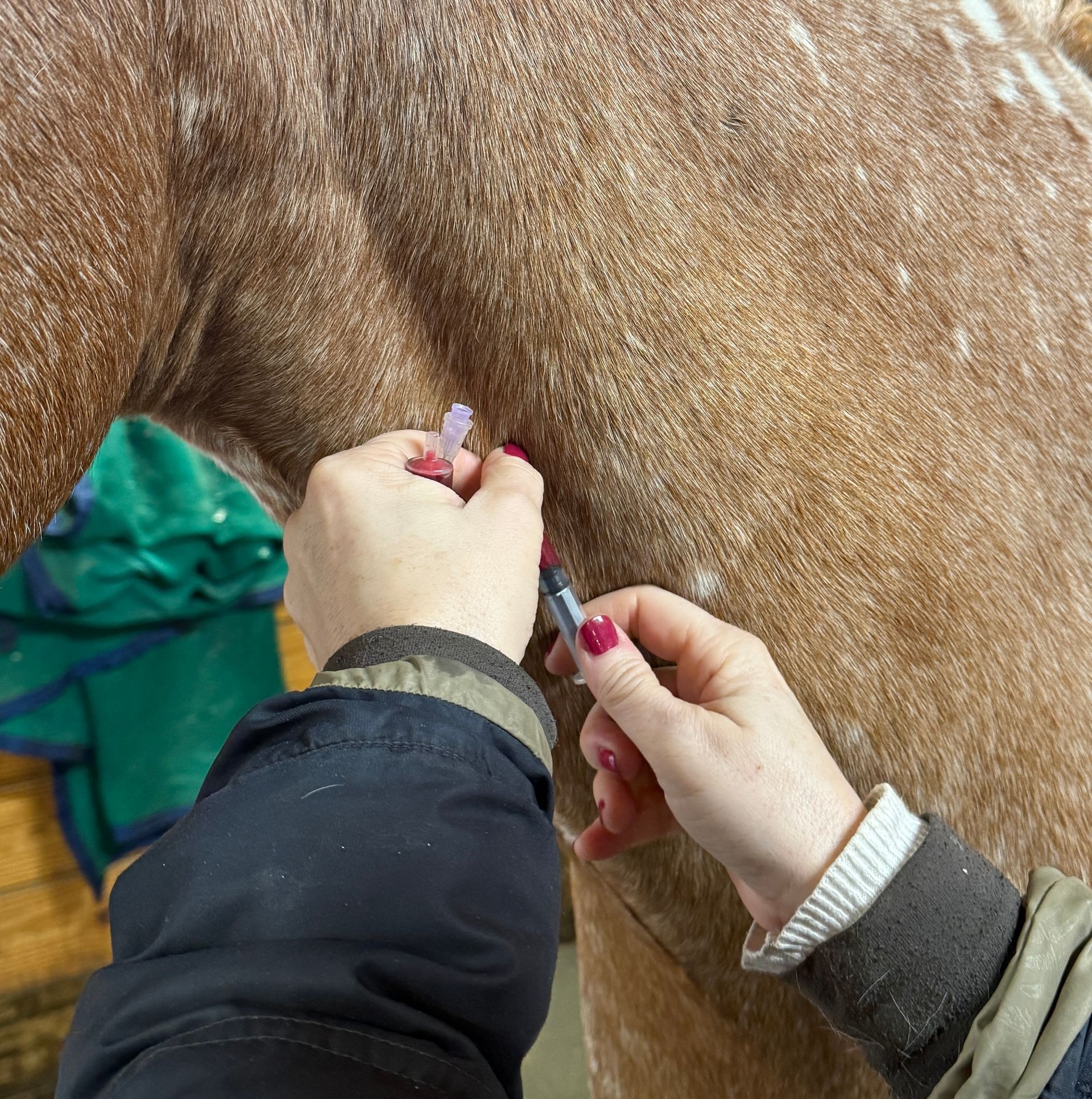
- Blood testing to evaluate insulin response, which may include fasting tests or dynamic testing such as an oral sugar test
This combination allows your veterinarian to understand not just how your horse looks, but how their metabolism is functioning.
Managing EMS
Nutrition Matters Most
Diet is the cornerstone of EMS management. The goal is to limit sugars and starches while still meeting your horse’s nutritional needs.
This often includes:
- Feeding low-sugar forage
- Soaking hay when appropriate to reduce sugar content
- Managing or limiting pasture access, especially during spring and fall
- Avoiding grain and sweet feeds unless specifically recommended
Every horse is different, which is why individualized nutrition plans are so important.
Thoughtful Exercise
Regular, appropriate exercise improves insulin sensitivity and supports healthy weight. The type and intensity depend on the horse — especially if there’s a history of laminitis — and should always be introduced gradually.
Veterinary Guidance
Some horses benefit from additional medical support, but management is always the foundation. Ongoing monitoring helps ensure that adjustments are made before problems arise.
Can EMS Be Prevented?
While not every case is preventable, risk can be reduced by:
- Maintaining a healthy body condition year-round
- Monitoring pasture intake during high-sugar seasons
- Scheduling regular wellness exams and hoof care
- Addressing small changes early, before they become big problems
Equine Metabolic Syndrome is common, manageable, and not a diagnosis to fear. With early recognition, thoughtful nutrition, and a strong partnership between owner and veterinarian, horses with EMS can live comfortable, active lives.
If you have concerns about your horse’s weight, fat distribution, or hoof health — or if you simply want to be proactive — we’re always happy to talk. Caring for your horse’s metabolic health is a team effort, and we’re proud to be part of yours.
This article was written by the veterinarians at North Bridge Equine Associates, an ambulatory equine veterinary practice serving horses in Massachusetts and surrounding regions. The information provided is intended for general educational purposes and is not a substitute for veterinary examination or care.
North Bridge Equine Associates
978-337-1260
Servicing Massachusetts, New Hampshire, and seasonal service to Aiken, South Carolina
Recent Posts